Why it started
The site is built for the moment when a real save goes sideways.The point is not to mirror a giant encyclopedia. It is to catch the search you make after a messy route, a bad boss session, or a return after a long break.
About this site
Small enough to scan fast, specific enough to change the next move.
This library is meant to feel closer to a working guide notebook than a giant archive: find the sticking point, open the page that still matches the save, and leave once the answer is clear enough to use.
Long detours, repeated artwork, or advice that sounds polished but still leaves the player guessing what to do next.
How the site is run
Core Keeper Editorial Desk keeps reopening pages when a route, screenshot cue, or next-step link stops feeling practical in a real run.
The Core Keeper Editorial Desk is the public byline responsible for guide wording, source context, revision notes, and reader correction follow-up.
That usually means progression order, boss prep, ore timing, or map logic still needs a cleaner answer. It also means repeated visuals and awkward layouts get fixed before more expansion pages are added.
Independent fan-run guide library. Not affiliated with Pugstorm, Fireshine Games, or official game support channels.
Reader contact goes through contact@bellwright.cc, and the current live setup stays simple: No reader accounts, paid access, Google AdSense, custom analytics, or live ad scripts are enabled today. Cloudflare Insights is used for basic traffic and performance measurement.
Why it started
The site is built for the moment when a real save goes sideways.The point is not to mirror a giant encyclopedia. It is to catch the search you make after a messy route, a bad boss session, or a return after a long break.
What gets trimmed first
Anything that sounds tidy but still leaves the run unchanged.That usually means long setup copy before the real fix, repeated visuals, or related links that never lead to a better decision.
What comes back onto the desk
Pages readers still reopen after the first answer.If players keep circling back to the same boss, ore, map, or progression page, that page goes back on the desk before another batch of expansion pages is added.
Public guide publisher
Helpful pages to start with
Core Keeper Beginner GuideUpdated Sep 8, 2026Core Keeper Early Game GuideUpdated Sep 8, 2026Best Boss Order in Core KeeperUpdated Sep 8, 2026Trust signals readers can verify
Core Keeper Editorial Desk handles the public review desk and keeps the bylines, corrections, and contact route visible.
Pages are reopened when the route, screenshot cue, or next-step link stops helping in a real save. That is easier to see than a generic freshness claim.
Updated dates, correction logs, support pages, and the public report queue all show where the site is actively maintained.
Public maintenance chain
A guide site looks more real when readers can see where problems go after they are found. This chain explains how layout issues, stale route advice, repeated images, and missing topics move from report to review to visible correction.
Report queue
Reader ReportsUse this when a page has repeated visuals, layout blanks, stale route advice, or a missing topic that should become its own guide.
Fix history
CorrectionsOpen this to see visible changes instead of silent edits hidden from readers.
Better clues
ContributeSend a route clue, screenshot context, or missing player question when one page needs more real-use detail.
Direct contact
ContactUse contact for privacy questions, site issues, or a report that needs a little more context.
What this proves to readers
Recent visible corrections
Public trust wording was unified across the main navigation and help surfacesAug 18, 2026About, contact, weekly, pages, topic, and policy surfaces now use clearer update language so the site reads like a normally maintained guide library instead of a repeated review template.Homepage now surfaces recent corrections more directlyAug 18, 2026The front page now has a clearer maintenance trail so readers can see recent fixes, current editors, and the public correction flow without digging through lower pages first.Topic hubs and trust surfaces were refreshed for the August 17, 2026 maintenance passAug 17, 2026Keyword topic pages, footer update labels, and public maintenance wording were tightened so topic landers read more like actively maintained guide surfaces than one-off filler pages.How pages get updated
What starts a review
Pages usually go back on the desk when a route clue, fight step, map cue, or support loop stops helping in a normal save.
What each review uses
Each update starts from one specific player situation, then gets confirmed against current in-game behavior, visible map cues, and linked references where needed before it goes back live.
What gets logged
If a recommendation, route clue, structure, or media note changes enough to matter, the revision trail and corrections log should make that visible.
How to read a test note
Each guide's review details describe the player situation and checking method used for that page. They are practical guide context, not official certification or a promise that every save, build, mod, or patch will behave identically.
Named editors
These names are used on live guide pages to show who most often handles the route, map, combat, or returning-player review pass for that type of problem.
Opening and progression editor
Early-game route cleanup, restart friction checks, and first-boss handoff reviews
Covers early-game resets and progression handoffs.
Review beat: Starter routes and progression ordering
Map and item route editor
Ore loops, landmark searches, and route-efficiency checks
Covers route memory, landmarks, and stop conditions.
Review beat: Map searches and resource routes
Combat and build editor
Boss prep audits, recovery-lane checks, and live build retests
Covers boss walls, recovery patterns, and live build tests.
Review beat: Boss prep and build stability
Returning-player and comfort editor
Patch drift reviews, old-save checks, and repeat-loop comfort passes
Covers return-to-save checks and long-session comfort passes.
Review beat: Patch reviews and comfort upkeep
Editorial beats
The site still publishes under one independent fan-run umbrella, but each section now carries a clearer review beat so boss prep, route notes, item loops, and returning-player pages can sound closer to normal maintenance work.
Starter-route reviews
First-hour route checks, restart friction cleanup, and beginner handoff notes
Keeps the first-hour pages focused on repeatable openings, faster next moves, and fewer false early priorities.
Next review trigger: Returns when new players still lose time to the same early detour, missing tool step, or awkward base loop.
Milestone-order reviews
Next-step triage, unlock-order cleanup, and progression handoff checks
Keeps progression pages narrow enough that readers leave with one milestone instead of five competing tasks.
Next review trigger: Returns when a milestone page still leaves the save broad, stalled, or too easy to misread after a patch or long break.
Fight-prep reviews
Arena comfort checks, wipe-pattern cleanup, and boss-prep handoffs
Keeps boss pages centered on real wipe causes such as lane shape, healing windows, visibility, and bad reset timing.
Next review trigger: Returns when a boss page still sounds right on paper but players keep losing to the same arena or recovery mistake.
Material-route reviews
Ore timing, item route clarity, and repeat-loop payoff checks
Keeps item pages built around one useful farming loop, one stop rule, and one clear reason the material matters now.
Next review trigger: Returns when a material page still attracts readers who really needed a timing answer, a map answer, or a simpler route.
Search-route reviews
Biome search logic, landmark trust, and return-route cleanup
Keeps location pages practical by focusing on sweep patterns, route memory, and knowing when the search should stop.
Next review trigger: Returns when a map page still causes wandering, weak notes, or route retries without a clearer search pattern.
Live-build reviews
Combat comfort checks, support-layer cleanup, and live-test handoffs
Keeps build pages grounded in live use by testing uptime, comfort, support layers, and when to stop tuning.
Next review trigger: Returns when a build page still reads like a loadout list instead of explaining why the setup wins or collapses in real content.
Repeat-loop reviews
Base comfort, farming loop payoff, and session-flow cleanup
Keeps farming and comfort pages useful by asking whether one loop still saves time, reduces clutter, or supports the next session.
Next review trigger: Returns when a comfort page still sounds tidy but the real loop remains slow, oversized, or disconnected from the save.
Patch-sensitive reviews
Update retests, old-save audits, and patch-risk handoffs
Keeps update pages narrow enough that returning players can tell what changed, what still holds, and which direct page to trust next.
Next review trigger: Returns when a page still invites broad rereads instead of quickly proving whether the route, build, or milestone still fits the current patch.
Common starting points
Next move
Progression pages point to the next thing worth opening after a boss, unlock, or dead-end.
One blocker
Targeted guides stay narrow so the answer is easier to reach and easier to trust.
Smoother run
Build, farming, and base pages focus on comfort, uptime, and routes that do not waste time.
Common player entry points
Updated Aug 14, 2026
You know what you are trying to find, but need the map logic, biome route, or landmark clue first.
Updated Aug 19, 2026
You just started a save and need the shortest, calmest way to get moving without wasting the first hour.
Updated Aug 19, 2026
You know you need another boss, but you want the order and prep fit before opening a random fight page.
You need to know which skill shelf should own the next point instead of guessing between several build ideas.
You need the cooking page that matches the reason the meals matter now: travel, boss prep, farming support, or repeat sessions.
You want the shortest page for base flow, not a decorative base build. The problem is usually unload speed, storage direction, or repeat-loop friction.
How visuals are labeled
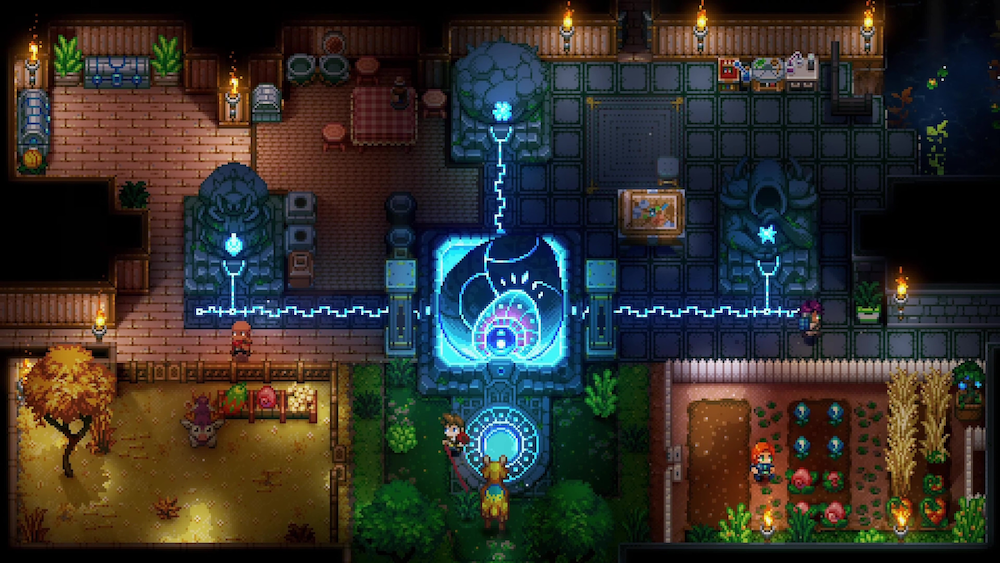
Where possible, the lead visual is an official Core Keeper screenshot so readers can compare the page to a normal in-game scene before using any extra annotations.
SVG boards, route notes, and setup sketches are kept as supporting editorial aids. They are labeled as editor notes and should not read like uncredited gameplay captures.
If a page starts leaning too heavily on repeated artwork or a diagram no longer matches the text, that page goes back into the maintenance queue before more expansion pages are added.
Scope and independence
Core Keeper Guides is an independent fan guide site. It is not affiliated with, endorsed by, or operated by Pugstorm or Fireshine Games.
The site publishes readable guide pages only. It does not offer game files, cheats, account access, paid unlocks, or required registration.
When a page relies on an external reference, it links to it. Patch-sensitive advice is revised, narrowed, or marked for review instead of presented as permanent.
What makes a page trustworthy
The useful part belongs before the long explanation, not after it.
Each guide is meant to solve one real player question instead of trying to sound complete about everything.
A good page makes the next boss, item, biome, or build decision easier right away.
What matters most
It should get you unstuck before it tries to sound complete.
Pages are grouped by the problem you actually have, not by category names alone.
The useful bits come first so you can leave as soon as the answer makes sense.
Good first routes